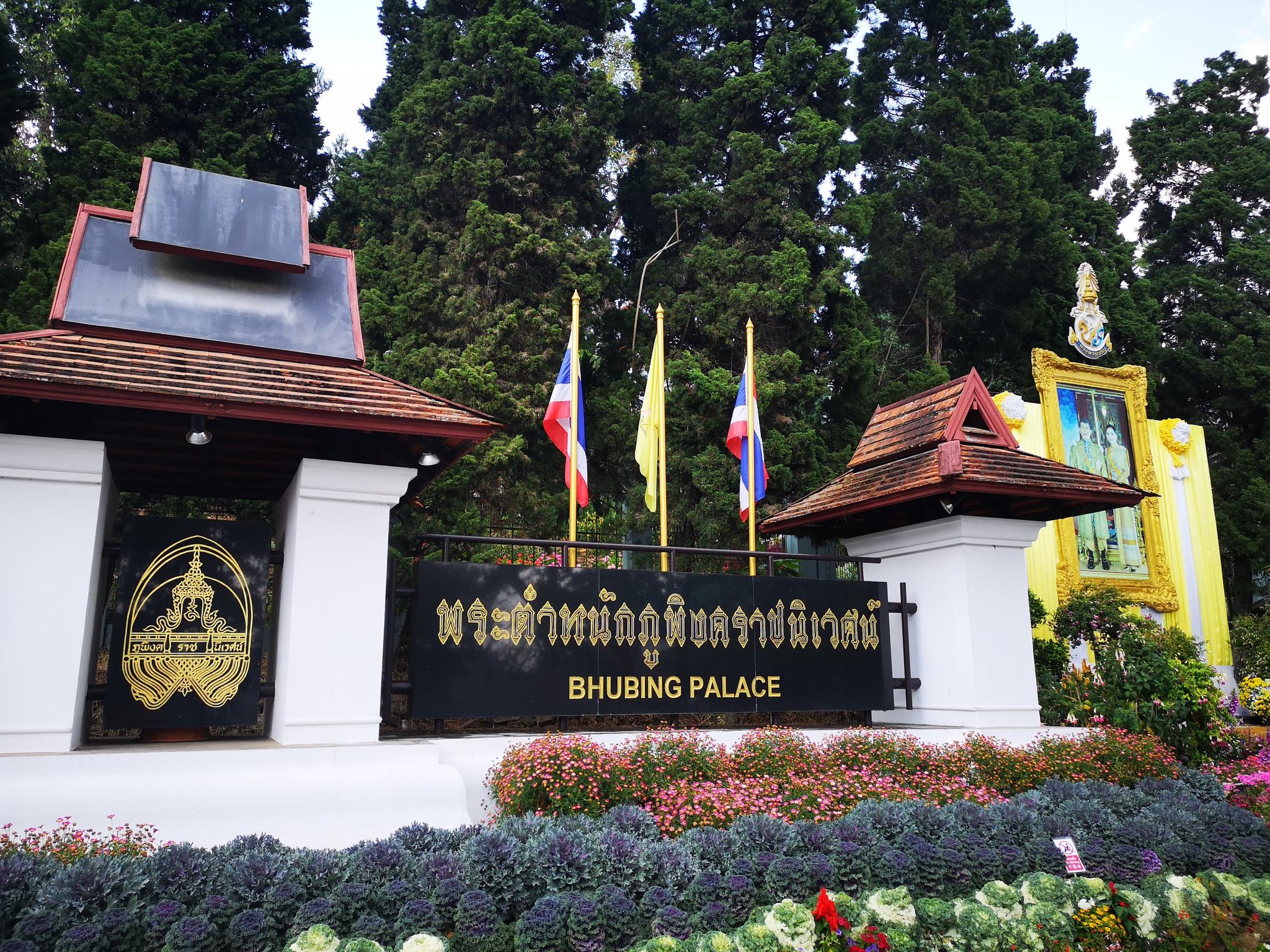
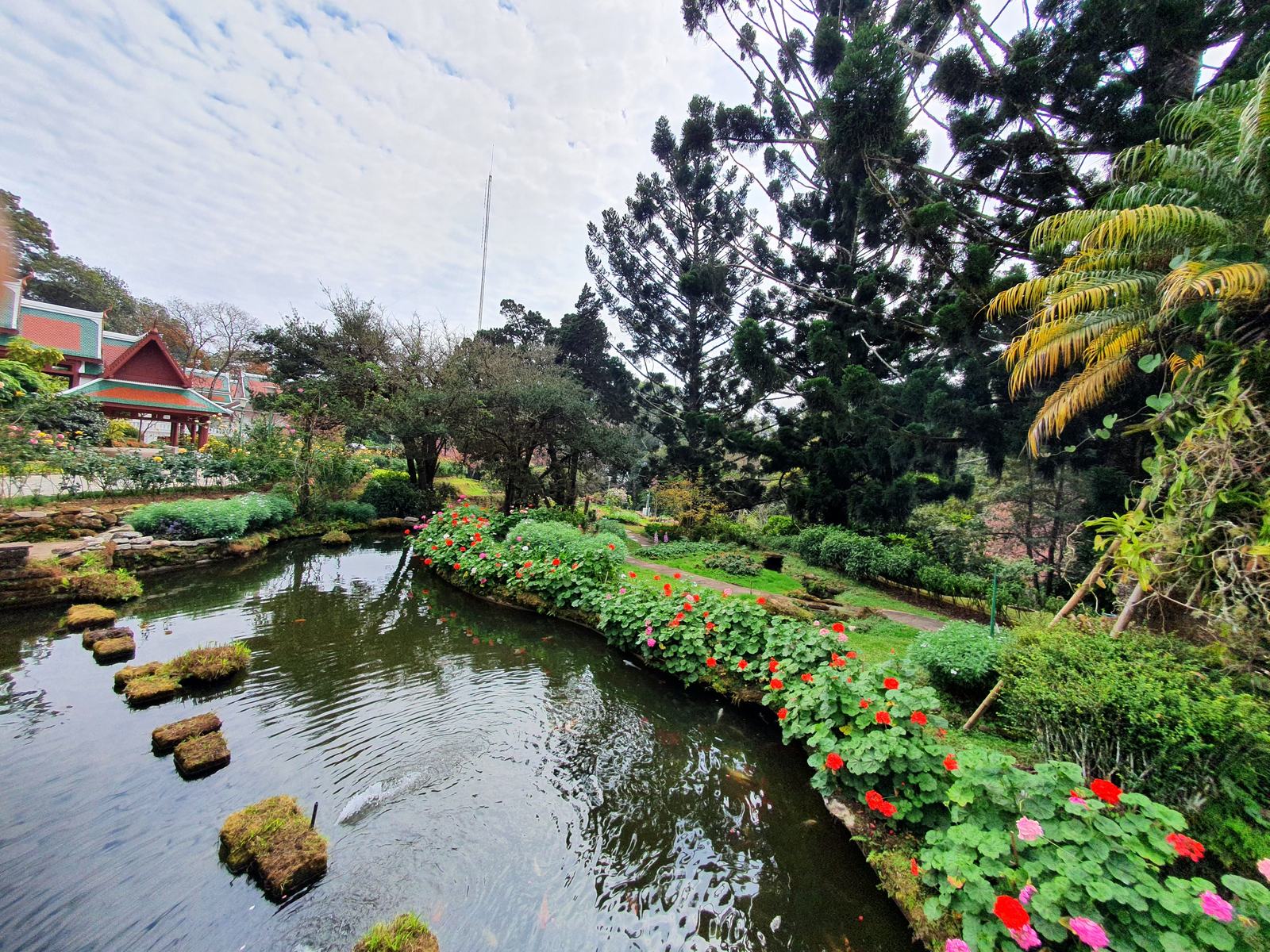
พระตำหนักภูพิงคราชนิเวศน์

This is a non-profit independent guide put together by travel enthusiasts, offering the most objective visitor information on Bhubing Palace free of charge, affiliated with no organization.

All information on this site is cross-checked against public materials from the Ministry of Hotels and Tourism (Thailand) and the Chiang Mai Region Government, with no commercial endorsements.

Bhubing Palace — main view in Chiang Mai, Thailand
⭐ 4.3 (5,505) · 5,505 reviews

Rating source: Google Maps · September 2026

Royal Winter Palace on Doi Suthep, Chiang Mai

Bhubing Palace (Chiang Mai, Thailand)

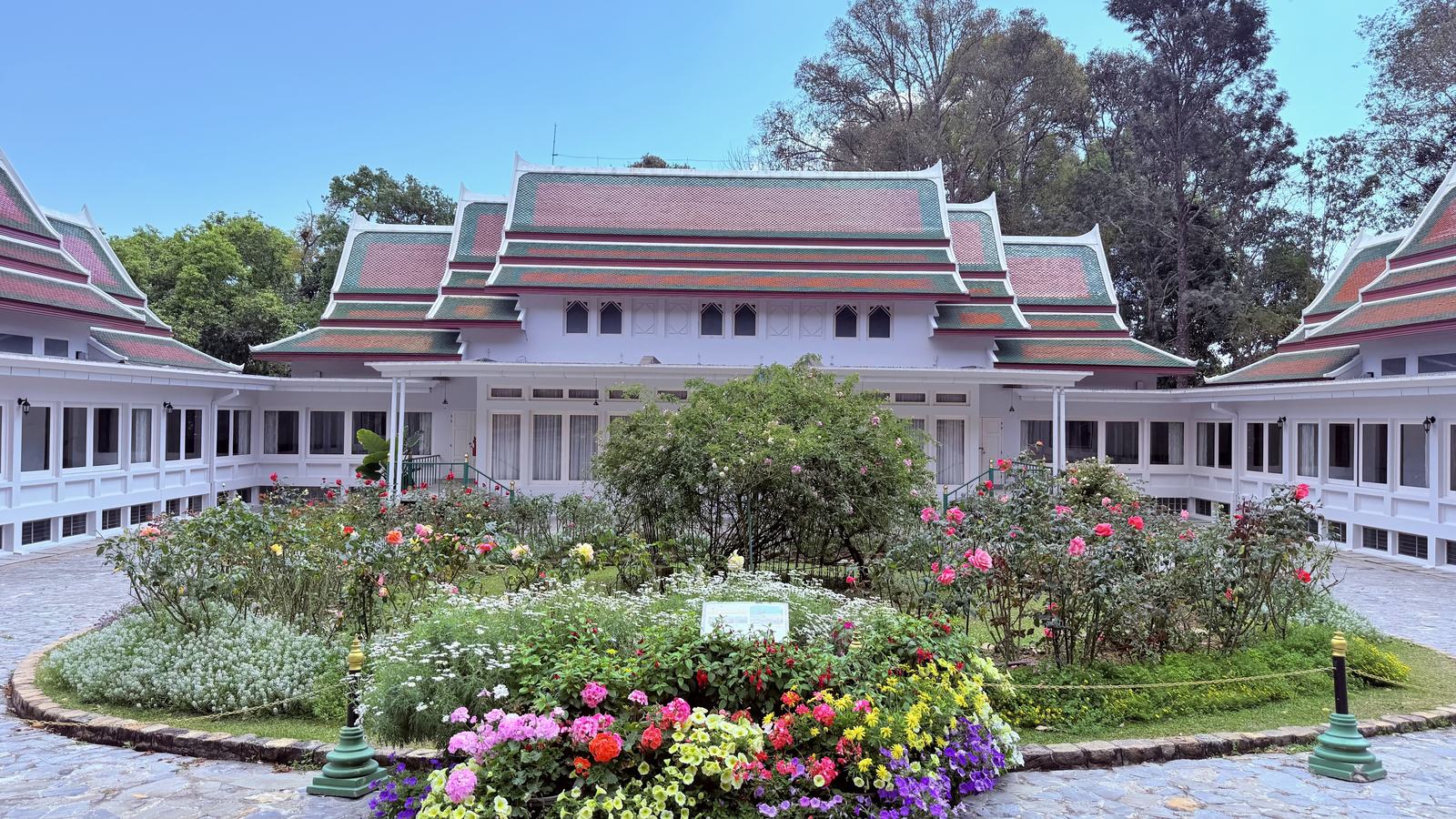
A royal winter residence at the junction of Bhubing Palace Road and Sriwichai Road in Doi Suthep Chiang Mai, Thailand. Built in 1961, with over half a century of history, it is famous for its beautiful Suan Suwaree rose gardens. It features traditional Thai architecture and sits high in the cool mountains. It is both Chiang Mai's urban landmark and royal retreat, and a rallying point for state receptions, surrounded by Suan Suwaree, Chiang Mai City Hall, and the Wat Phra That Doi Suthep.

Highlight Thai-style elegant spire
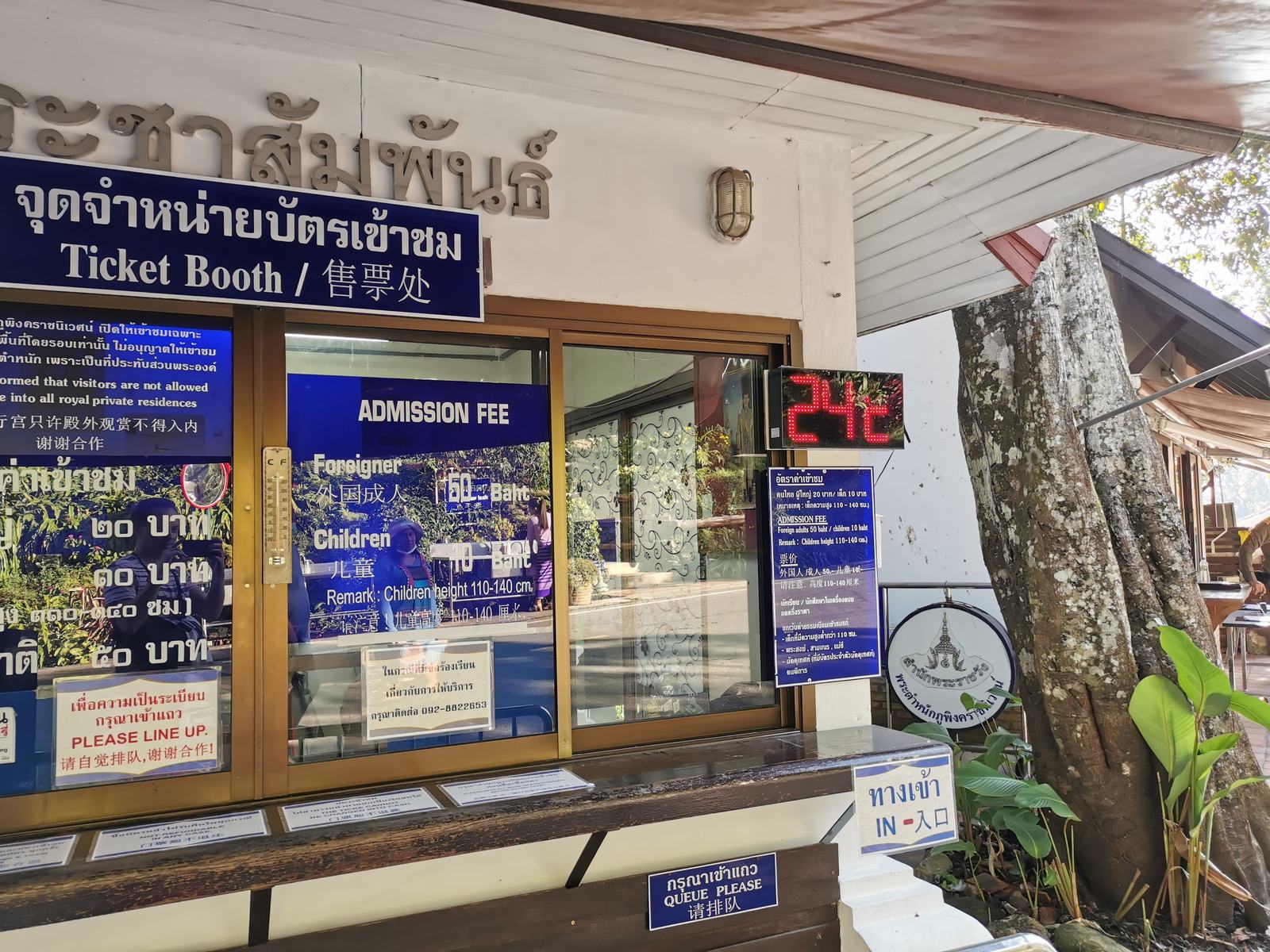
Foreign visitors Ticket required
Hours 04:00–23:00

🔗 Hours & tickets per Chiang Mai City / on-site info

08:30–16:30 (Tickets until 15:30. Usually closed Jan–Mar during royal visits)

Usually open 08:30–16:30 (ticket office until 15:30). May close when the royal family is in residence — please confirm before visiting.

⛰️ Mountain —
🏙️ City —

'Bhubing' is named after the royal vision (Lanna) of this place. Standing at the exact center of the city, the palace is like Chiang Mai's beating heart — for over half a century it has quietly gathered the city's noise and exploreers.

— The origin of Bhubing Palace

Bhubing Palace at a Glance · Data Board

A few numbers to read this royal winter residence at the heart of Chiang Mai at a glance.

palace / palace

Urban faith center

Bhubing Palace is Chiang Mai's Doi Suthep royal landmark. Its Thai-style architecture runs from base to spire, crowned by a elegant finial — a place for locals to explore and visitors to sightsee.

garden / garden

beautiful rose gardens

The palace is said to enshrine a beautiful rose gardens, sharing the same origin as Chiang Mai's other great shrine, Wat Phra That Doi Suthep — a key node of Burmese royal heritage.

History / History

Over 60 years

Believed founded during the 1961, over half a century old; in modern times it became a rallying point for the royal family's winter visits and state receptions, carrying the city's collective memory.

Coordinates / Coords

about 18.81°N, 98.92°E

WGS84: 18.8053, 98.8986. Plus Code: RW42+45 Chiang Mai. Address: 1 Moo 12 Sriwichai Alley, Suthep, Mueang Chiang Mai District, Chiang Mai 50200, Thailand.

Admission / Admission

Foreign ticket

Local visitors enter free; foreign visitors buy a ticket at the entrance (a few USD), subject to on-site notice.

Hours / Hours

04:00–23:00

Open from early morning to night; dawn and dusk are coolest and best for photos and quiet reflection.

Getting to Know Bhubing Palace

Bhubing Palace (พระตำหนักภูพิงคราชนิเวศน์) stands at the junction of Bhubing Palace Road and Sriwichai Road in Doi Suthep Chiang Mai, Thailand — a royal winter residence at the heart of the city. Believed founded during the 1961 over 60 years ago, it is famous for its beautiful Suan Suwaree rose gardens. It features traditional Thai architecture and sits high in the cool mountains. Maintained by the Royal Household Bureau, it has long been a city center where visitors explore, travelers sightsee, and citizens gather — one of Chiang Mai's city cards of 'city, history, and faith'.

About this city palace

Bhubing Palace stands at the junction of Bhubing Palace Road and Sriwichai Road in Doi Suthep Chiang Mai — a royal winter residence believed founded during the 1961. Enshrining a beautiful rose gardens, It features traditional Thai architecture and sits high in the cool mountains. Maintained by the Royal Household Bureau, it is a center where citizens explore, travelers sightsee, and the city gathers — one of Chiang Mai's city cards of 'city, history, and faith'.

Highlights

  • ✦A Doi Suthep royal winter residence believed founded during the 1961, over 60 years old
  • ✦is famous for its beautiful Suan Suwaree rose gardens, sharing faith with Wat Phra That Doi Suthep
  • ✦Thai-style architecture from base to finial, elegant spire about high in the mountains high
  • ✦A rallying point for the royal family's winter visits and state receptions, carrying city memory
  • ✦Surrounded by Suan Suwaree, Chiang Mai City Hall, and the Wat Phra That Doi Suthep

About Bhubing Palace

Welcome to Bhubing Palace, the royal winter residence widely recognized as Chiang Mai's central highland palace. Located in the heart of Chiang Mai, Chiang Mai Province, Thailand, this destination serves as a primary hub for travelers exploring the Doi Suthep region and the northern highlands.

Location & How to Visit Bhubing Palace in Chiang Mai

Bhubing Palace stands at 1 Moo 12 Sriwichai Alley, Suthep, Mueang Chiang Mai District, Chiang Mai 50200, Thailand (Plus Code RW42+45), roughly 1,300 m above sea level on Doi Suthep mountain and about 4 km uphill from Wat Phra That Doi Suthep. From central Chiang Mai it is a 30–40 minute drive along Highway 1004 (Huay Kaew Road) by songthaew, car or taxi. Tickets are sold until 15:30, and the palace normally closes to visitors during royal residences, usually from January to March.

📍 Open in Google Maps ↗

History & Significance of Bhubing Palace

Bhubing Palace was built in 1961 by order of King Bhumibol Adulyadej (Rama IX) as a winter residence for the Thai royal family and a guesthouse for visiting heads of state. Named after Phu Ping, the traditional guardian spirit of the mountain, it is celebrated for its Lanna-style 'Ruen Mu' wooden pavilions and the Suwaree Rose Garden. It remains an active royal residence that opens to the public whenever the royal family is not in residence.

Landmarks & Attractions Around Bhubing Palace

When visiting Bhubing Palace, travelers can easily explore the surrounding historical landmarks and points of interest, including Wat Phra That Doi Suthep and Doi Pui Hmong Village.

Wat Phra That Doi Suthep

Chiang Mai's most revered temple, about 4 km downhill, famous for its golden chedi and panoramic city views.

Doi Pui Hmong Village

A Hmong hill-tribe village and mountain viewpoint a few minutes above the palace.

Suan Suwaree Rose Garden

The palace's own rose garden, home to hundreds of rose varieties and seasonal flower beds.

Doi Suthep–Pui National Park

The surrounding protected forest, with waterfalls, nature trails and cool mountain air all year round.

Suan Suwaree Botanical Guide

Rare alpine roses and temperate flowers introduced by Queen Sirikit

Juliet Rose

Juliet Rose

Rosa 'Ausjameson'

🌸 Year-round

Known for its magnificent form and light tea fragrance, one of the most popular varieties.

Peace Rose

Peace Rose

Rosa 'Madame A. Meilland'

🌸 Nov - Feb

A classic hybrid tea rose with pale yellow petals edged in pink.

Highland Orchids

Highland Orchids

Orchidaceae

🌸 Dec - Mar

Endemic orchid species of Northern Thailand carefully cultivated in the glasshouses.

Giant Tree Ferns

Giant Tree Ferns

Cyatheales

🌸 Evergreen

Ancient and massive ferns lining the shaded pathways of the royal gardens.

Royal Timeline

Half a century of royal heritage

1961

Foundation

King Bhumibol Adulyadej (Rama IX) ordered the construction of a winter retreat on Doi Suthep.

1962

First State Guests

Hosted King Frederick IX and Queen Ingrid of Denmark, beginning its role as a state guesthouse.

1990s

Suan Suwaree Rose Garden

Queen Sirikit led the introduction of hundreds of rare roses, creating the magnificent garden seen today.

Present

Botanical Conservation

Open to the public as a highland botanical treasure when the Royal Family is not in residence.

History & Local Legends

How a royal winter residence on Doi Suthep became one of Chiang Mai's best-known highland gardens — and the stories locals tell about it.

1961

A Royal Winter Residence

Bhubing Palace was built in 1961 as a winter residence for the Thai royal family. The site was chosen at roughly 1,373 m on Doi Suthep, where the air stays cool and the seasons feel temperate — a natural escape from the heat of Chiang Mai and a place to receive state guests.

1962

From Residence to Botanical Garden

Once the residence was complete, temperate and highland plants were steadily introduced. Specialist gardens took shape — rose, aquatic, fern and moss — combining the role of a royal garden with research and conservation.

Open

Opened to the Public

When the royal family is not in residence, the grounds open to visitors. Guests follow designated walkways past the principal gardens and viewing terraces, experiencing a mountain garden layer by layer.

Management

An Official Management Framework

The grounds are managed and maintained by the royal household. Opening hours, dress code and conduct rules are therefore strict — not to inconvenience visitors, but to protect both a working royal site and its plant collections.

Today

Bhubing Today

It is now Chiang Mai's best-known hilltop garden and the most common companion stop to Wat Phra That Doi Suthep. It sits within a wider belt of highland horticulture that includes the Hmong village and roadside nurseries at the foot of the mountain.

📖 Local Legends

Where the rose garden came from

It is said the earliest plantings came from royal private collections and gifts from friendly nations — which is why the rose garden carries an international character in both varieties and layout.

Why the summit is so cool

Locals say the mountain 'keeps its own weather'. Temperature falls roughly 0.6°C per 100 m of elevation, and forest cover plus mountain cloud keeps the summit 5–8°C cooler than the city all year.

Why the dress code is so strict

Residents treat this as a royal site rather than an ordinary park: the dress code expresses respect, not an extra ticket condition. Trousers and sarongs can be borrowed on site.

🗓️ Key Milestones

  1. 1961

    Construction begins on the royal winter residence at roughly 1,373 m.

  2. Around 1962

    Principal buildings and garden landscapes are completed; temperate and highland plants are introduced.

  3. Opening period

    The grounds open to the public whenever the royal family is not in residence, gradually becoming a leading Chiang Mai attraction.

  4. From 2006

    Plant conservation and research are strengthened and the specialist gardens are progressively refined.

  5. Recent years

    Bhubing, Doi Suthep, the Hmong village and the Monk's Trail together form the standard Doi Suthep day trip.

  6. Before you visit

    Always confirm that the grounds are open that day — they close temporarily during royal residencies.

The chapters and legends above are background written for visitors. For exact historical facts, opening policy and regulations, always refer to on-site notices and official announcements.

People & Place: From Urban Coordinate to Collective Memory

Putting the founding legend, the Thai-style structure, the hair-garden faith, and modern urban movements on one timeline is how you truly understand why this palace is more than 'a pretty golden tower'.

1

Founding legend & ancient history

Bhubing Palace is believed founded during the 1961, over 60 years old, among Chiang Mai's oldest religious landmarks. Named after the royal vision 'Bhubing' (Lanna), it has stood at the city's center since its founding, witnessing generations of Chiang Mai city life.

2

The name 'Bhubing' and city memory

'Bhubing' derives from the royal vision (Lanna) in Burmese folk belief; the palace is named after the vision and became the city's visionual coordinate. At the central junction, it meshes with Suan Suwaree and Chiang Mai City Hall — the first urban reminder for every visitor.

3

rose garden & faith center

The palace is said to enshrine a beautiful rose gardens, sharing the same origin as Chiang Mai's other great shrine, Wat Phra That Doi Suthep. This garden makes Bhubing Palace a key node of royal heritage, lifting it from a city old tower to a sanctuary visited by visitors and travelers.

4

Thai-style architecture & architecture

Bhubing Palace's most distinctive feature is its Thai-style architecture — eight-sided from base to finial, elegant outside. This form is unique among Burmese palaces, giving it strong recognition in the city skyline.

5

Urban movements & collective memory

In modern times, because of its central location, Bhubing Palace has repeatedly been a rallying point for state receptions: the 1988 democracy movement and the 2007 Saffron Revolution both centered here. It is both a religious shrine and a witness to modern Burmese history.

6

Platform & exploreer space

The base platform surrounds the elegant main stupa, with shrines, fountains, and drums at the corners. visitors circumambulate, offer flowers, and light candles; the fountain and birdsong are Bhubing Palace's most iconic soundscape.

7

Surrounding urban landmarks

The palace faces Suan Suwaree and the Wat Phra That Doi Suthep, near Chiang Mai City Hall and the colonial High Court, forming a 'palace—park—city' spatial narrative.

8

Urban ecology & street environment

Bhubing Palace is in a busy Doi Suthep, surrounded by urban greenery, corner shrines, and colonial buildings. Here you see citizens exercising, visitors exploreing, and tourists strolling — a natural classroom for observing Chiang Mai city life.

Urban base & form

The palace sits at an open Doi Suthep junction; the Thai-style elegant body stands out between City Hall and the park, with gentle platforms letting visitors approach the base without harming the heritage.

Signature: citizens & street life

The platform is where visitors circumambulate, offer flowers, and meditate at dawn — most active then, echoing the Buddhist 'life-protecting' vision.

palace-watching tip

Morning or evening is when the elegant body is most vivid and the crowd most relaxed. Stand on the park side looking at the spire to observe light and city rhythm.

Observation tip

First take in the whole palace from the park height, then return to the platform to see the Thai-style architecture and exploreing crowd up close. Distance shows the overall form; close view reveals the city-faith relation.

Academic note

This section is a science overview based on public interpretation and on-site features. For stricter historical and architectural classification, rely on official materials, on-site signs, and academic research.

9

Urban legends (local oral tradition)

About Bhubing Palace and the royal vision 'Bhubing', a local oral tradition tied to city protection is passed down: the vision is said to guard the peace of this place, and citizens revere the palace and explore. Such legends may not appear in official histories, but they let the public sense how this land was imagined and cherished.

Did you know?

Bhubing Palace is more than a Doi Suthep golden tower — it is an open-air classroom of city memory and faith: from the founding legend and rose garden to the Thai-style elegant body and modern peaceful movements, the story of land and faith is written into the same heart of Chiang Mai.

Reading the On-site Signs & Interpretation

When you visit Bhubing Palace, what's worth reading slowly is often not the check-in board but the official signs explaining 'why this palace is here'.

The readings below are based on the founding history, garden legend, and structure signs set up by the Chiang Mai City and the site, translating information visible on-site but not always read into accessible English science notes.

palace history sign

Bhubing Palace & its founding

📷 现场原图对照
🔄 Click to translate

Bhubing Palace & its founding

📍 On-site location · Platform main entrance

These signs state the key background — the meaning of Bhubing Palace as a Doi Suthep royal winter residence and its naming relation with the royal vision. Reading the hints is lesson one in using this urban landmark.

garden guide (MY/EN)

rose garden & faith

📷 现场原图对照
🔄 Click to translate

rose garden & faith

📍 On-site location · Base platform

The guide repeatedly emphasizes the rose garden as the faith center and reminds visitors that this palace is half history legend, half citizens' faith imagination. It clearly explains 'why it is a shrine'.

Thai-style structure interpretation

Architecture & urban coordinate

📷 现场原图对照
🔄 Click to translate

Architecture & urban coordinate

📍 On-site location · Platform viewpoint

The map explains 'why this is an urban nexus'. The Thai-style elegant body makes Bhubing Palace unique in Chiang Mai's skyline; seen with the colonial buildings, the palace's design logic becomes clear.

Urban-movement marker

Modern peaceful demonstration site

📷 现场原图对照
🔄 Click to translate

Modern peaceful demonstration site

📍 On-site location · Park side

Erected by the city, it marks Bhubing Palace's historical role as a rallying point for the royal family's winter visits and state receptions, echoing the 'city and faith' motif. It reminds every visitor: this junction connects the quietest faith and the loudest city memory.

palace & City: Stupa, Faith & Chiang Mai

Look past the surface 'pretty' to find what's truly rare about this palace: it is at once a city religious site, a royal heritage, and an open-air urban classroom.

🛕

The faith story hidden in the body

Bhubing Palace & royal heritage

Bhubing Palace's hardest core is both visible and invisible. Visible are the Thai-style elegant body and the city skyline; invisible is the beautiful rose gardens and citizens' exploreers. Visitors see the landscape; the faithful see the Buddha placed at this city center as a local text.

  • ✦Core: royal heritage, urban coordinate, and Thai-style architecture light up this heart of Chiang Mai.
  • ✦Key: a religious site turned into a low-impact, high-empathy urban classroom.
  • ✦Meaning: it upgrades the 'urban green' into a faith template the public can sightsee to.
📜

Bhubing Palace's cultural symbol

Urban symbols in the body

The Thai-style elegant body, Suan Suwaree, and colonial buildings, together with Chiang Mai, form Bhubing Palace's identity system: reading instantly as Chiang Mai, as Thailand, and as a gentle, transparent urban aesthetic. From the Doi Suthep view to the dawn fountain, this contrast makes it one of Chiang Mai's most memorable images.

  • ✦Imagery: palace, park, and city form a strong identity.
  • ✦Status: one of Chiang Mai's most photogenic urban landmarks.
  • ✦Narrative: it translates the religious theme into a publicly felt aesthetic.

Why is this Chiang Mai's urban landmark?

What's most worth learning about Bhubing Palace isn't 'it got prettier' but how it re-integrated a city junction into the public's royal heritage while keeping reverence for history.

A city palace still used by citizens

Bhubing Palace isn't a 'hide the palace and done' case, but a model that activates city memory through religious-space design and turns it into shared place.

  • •visitors give daily exploreer and travelers give quiet retreat to this platform and fountain.
  • •Religious space and the city coexist long-term.

Writing faith ethics into visitor behavior

Signs, platform, and guide systems aren't just navigation but let every visitor, while using the space, casually respect the religious site and others.

  • •Visitors are guided to stay on low-impact paths.
  • •Viewing experience and retreat life don't sacrifice each other.

Translating faith memory into public aesthetics

Bhubing Palace didn't erase the faith background but, through the body and signage, lets the public sense what this land has been through while visiting.

  • •Story depth and viewing experience complete in one place.
  • •Exactly the value a non-profit science site should amplify.

Bhubing Palace's Four-Season City

Look past the 'pretty tower' to find what's truly rare about Bhubing Palace: it turns a city junction into an open-air urban classroom that changes with the seasons.

Cool-season colors

Cool season & urban new green

The cool season (Nov–Feb) is Chiang Mai's most comfortable. Pleasant temperatures and clear air, paired with park new green, form the city's brightest palace-platform palette.

  • •About Nov–Feb, 20–30°C, most comfortable.
  • •Morning and dusk light is soft, best for photos.
  • •With the elegant body, most cool-season energy.

Hot-season colors

Hot season & clear sky

The hot season (Mar–May) has high sky and clear city, but hot midday; the elegant body at dawn and dusk is especially clear.

  • •About Mar–May, dawn and dusk best for visits.
  • •City skyline is transparent, high photo rate.
  • •Mind sun protection and water.

Seasonal Highlights

One palace, two tempers. Below, the scenes most worth expecting each season.

COOL

Cool · new green & breeze

The cool season before the warm-up is the city's most comfortable, best for slow visits and dawn shots.

  • •Park new green lines the path.
  • •Morning and dusk light softest.
  • •Crowd relaxed, good for quiet.

HOT

Hot · clear sky & golden body

High sky and clear city, but hot midday; the elegant body at dawn and dusk is most photogenic.

  • •Body outline clearest backlit.
  • •Dawn and dusk best for visits.
  • •Mind sun protection and water.

RAINY

Rainy · showers & freshness

The rainy season (Jun–Oct) has brief showers; after rain the city is fresh and the body brighter — a different window to view the palace.

  • •After rain the elegant surface reflects strongest.
  • •Avoid midday sun and standing water.
  • •Platform slippery, mind your feet.

YEAR-ROUND

Year-round · heart of the city

Bhubing Palace is open all year, the starting point for understanding Chiang Mai's urban fabric; dawn and dusk are always the best windows.

  • •Dawn city waking, platform quietest.
  • •Dusk elegant warmest, best for slow shots.
  • •Mind sun protection and street safety.

Who Should Come? Upgrade Segment Guides to Custom Itineraries

Not just 'you'll like it,' but directly telling you how to walk, where to go first, and which Chiang Mai nodes to link.

Families

Resonance: Free, open, flat platform — kids can watch the elegant body, hear the garden story, and easily reach the park along the flat side.

Tip: Spend energy on photo stops, not on crowding; mind midday sun.

Photographers & Couples

Resonance: Dawn city waking and backlit spire are Chiang Mai's most romantic frames, with very high hit rate.

Tip: Count arrival, return, and light into the plan so composition isn't beaten by on-site pace.

Faith & Culture Lovers

Resonance: As a faith-and-history sample, the rose garden, Thai-style architecture, and modern urban movements are worth a close look.

Tip: Avoid the most crowded weekends; choose dawn or a weekday afternoon to really observe details.

First-time Visitors to Thailand

Resonance: Without going far, experience Burmese royal heritage and colonial urban heritage in Doi Suthep; link taxi, walking, and street food — an ideal start to the 'city and faith' theme.

Tip: If you can pick only one Doi Suthep Chiang Mai spot, Bhubing Palace opens the 'palace and city' theme best.

Science & Visitor Responsibility

Bhubing is more than a scenic garden: it also carries out highland plant conservation, mountain climate observation and public environmental education.

Highland Plant Conservation

The grounds collect and cultivate temperate and subtropical highland plants, keeping living specimens for species preservation and horticultural research.

  • ✦The specialist gardens are zoned by ecological habit, making it easy to compare how plants perform at different altitudes.
  • ✦Please do not pick flowers, break branches or remove any plant material.
  • ✦When photographing, avoid trampling beds and moss areas — they recover very slowly.

Mountain Climate Observation

At roughly 1,373 m, the grounds are a natural vantage point for studying mountain climate and cloud belts.

  • ✦Summit temperatures run 5–8°C below central Chiang Mai, with a wider day–night swing.
  • ✦Clear dry-season mornings often bring a sea of cloud and radiation fog — a vivid lesson in mountain weather.
  • ✦Please do not move or touch weather instruments or research equipment.

Biodiversity Watching

The gardens and surrounding woodland give birds, butterflies and pollinators habitat and foraging ground.

  • ✦Keep your distance and avoid close-up flash photography.
  • ✦Do not feed animals or play birdsong recordings to lure birds in.
  • ✦If you record a species, submit it through an observation app to become citizen-science data.

Visitor Responsibility & Etiquette

As a working royal site and a protected garden, how visitors behave directly affects whether it can stay open.

  • ✦Follow the dress code (shoulders and knees covered); trousers and sarongs can be borrowed on site.
  • ✦Stay on designated walkways and keep out of beds, lawns and closed areas.
  • ✦Take your rubbish with you and observe the bans on smoking and drones.

Seasonal Visiting Strategy

Overlay weather, the grounds' water and planting cycle, and wildlife activity to see what each season is actually best for.

Climate baseline: 1991–2020 30-year normals for the Chiang Mai area, combining mountain station observations with regional reanalysis.

Early cool season · Nov–Dec

Weather
Dry and clear; nights around 8–15 °C on the ridge, afternoons 20–26 °C, and the lowest rain probability of the year.
Water & planting
Reservoir and lily-pond levels are stable early in the dry season; deciduous trees begin to turn and bedding flowers hold their late-autumn flush.
Wildlife
Mountain birds are active — listen for calls along the garden edges at dawn; butterfly numbers begin to fall back.
Crowd level
Second-highest of the year; weekends and holidays are the busiest.
What to do
One of the most comfortable windows of the year. Arrive before 08:00 and carry a light jacket for the temperature swing.

Late cool season · Jan–Feb

Weather
Clear and dry; nights can drop to 5–12 °C with occasional cold snaps, while afternoon UV is strong.
Water & planting
Peak flowering season — the rose garden and temperate beds open together, and the display depends heavily on irrigation.
Wildlife
Nectar plants draw bees and sunbirds; dawn birdsong density is the highest of the year.
Crowd level
The year's peak, with possible closures where it overlaps royal residencies.
What to do
Best display, densest crowds. Come at opening time, and always confirm the grounds are not closed for a royal visit.

Hot season · Mar–Apr

Weather
The hottest stretch: the city can exceed 38 °C, the summit sits at roughly 28–33 °C in the afternoon, and air clarity drops.
Water & planting
Lowest water levels of the year and the heaviest irrigation load; some bedding flowers go dormant and foliage plants dominate.
Wildlife
Daytime activity falls away — dawn and dusk are the observation windows, with cicadas loud in the canopy.
Crowd level
Eases off; weekday mornings are comparatively quiet.
What to do
Go early and leave early. Watch hydration and sun protection, and check air quality if you are sensitive.

Rainy season · May–Oct

Weather
Frequent afternoon thunderstorms, 15–20 rain days a month at the peak, high humidity and fast-forming fog on the road.
Water & planting
Reservoir and ponds at their highest; aquatic plants, ferns and mosses at their most luxuriant — the best moss viewing of the year.
Wildlife
Frogs and insects thrive, and butterflies and dragonflies increase after rain — the best season for invertebrates.
Crowd level
The quietest period of the year.
What to do
Bring rain gear and grippy shoes, avoid exposed viewing terraces during storms, and drive carefully in low visibility.

Normals are statistical averages; individual years deviate substantially. Always check the latest forecast before travelling.

Transport & Arrival Guide

Consolidating arrival in Chiang Mai, in-city transfers, walking, parking, and nearby links for a clearer Bhubing Palace plan.

After arriving in Chiang Mai

Bhubing Palace is at the junction of Bhubing Palace Road and Sriwichai Road in Doi Suthep Chiang Mai — the city's most recognizable coordinate. The easiest public transit is to fly to Chiang Mai International Airport (CNX), then take a taxi or Grab about 30–45 minutes to Doi Suthep. Once Doi Suthep, a walk or short taxi ride from surrounding blocks takes about 5–15 minutes to the platform. The palace is right at the core junction; from the drop-off you walk straight onto the platform.

Around Bhubing Palace is the city core with limited parking. Plan transport, parking, and walking together — especially with seniors, young children, or luggage, parking at a nearby mall or hotel then walking greatly reduces hassle.

Remember before departure

  • •The palace is at a central junction; about a 5–15 min walk from surrounding blocks to the platform.
  • •Foreign visitors need a ticket; platform exploreer is free. Night lighting is limited; daytime or dusk visits are more comfortable.
  • •The Doi Suthep junction is crowded; avoid peak times. Nearby mall parking is available.
✈️

Flight + taxi (to Chiang Mai)

Public transit to Chiang Mai

Easiest for most travelers: fly to Chiang Mai International Airport (CNX), then taxi or Grab into Doi Suthep — the classic route to Bhubing Palace.

  • -Taxi/Grab from airport to Doi Suthep about 30–45 min (by traffic).
  • -After arrival, walk or taxi to Bhubing Palace about 5–15 min.
  • -Use Grab or similar local apps for transparent pricing and easy communication.
  1. 1Fly to Chiang Mai International Airport (CNX).
  2. 2Take a taxi or Grab to Doi Suthep.
  3. 3Walk to the Bhubing Palace platform.
🚕

Taxi / Grab (to palace)

In-city to the palace

Flexible and convenient; set the destination to 'Bhubing Palace' — drivers know this city coordinate, easy from any Doi Suthep hotel.

  • -Taxi from Doi Suthep hotels to Bhubing Palace about 5–20 min.
  • -Grab pricing is transparent; use a map app for real-time view.
  • -Doi Suthep congests at peak; allow buffer time.
  1. 1Call a car via Grab or similar.
  2. 2Tell the driver 'Bhubing Palace'.
  3. 3Get off at the junction, walk to the platform.
🚉

Chiang Mai Rod Daeng (Red Truck) (to Chiang Mai University)

The hidden nearby option

Chiang Mai Chiang Mai University is only a few hundred meters from Bhubing Palace. Take the Rod Daeng (Red Truck) then walk about 10 minutes — ideal for travelers wanting a local commute experience.

  • -Chiang Mai University has frequent trains, closest to the palace.
  • -About a 10-min walk from the station to the main sights.
  • -Mornings and weekdays are best to avoid crowds.
  1. 1Take the Rod Daeng (Red Truck) to Chiang Mai University.
  2. 2Walk along the street about 10 min.
  3. 3Reach the elegant platform and park.
🅿️

Driving (parking / mall)

Via Doi Suthep · nearby parking

Good with seniors/children, lots of luggage, or touring the city; roads near the palace are narrow with limited parking — park at a nearby mall or hotel.

  • -Set navigation to 'Bhubing Palace' or 'Bhubing Palace Road, Chiang Mai'.
  • -Nearby mall/hotel parking is primary; roadside stopping is restricted.
  • -Doi Suthep is busy; drive slowly and park properly.
  1. 1Navigate to 'Bhubing Palace'.
  2. 2Park at a nearby mall, then walk in.
  3. 3Avoid the 11:00–19:00 peak to save parking time.
🚶

Walk (Doi Suthep streets)

From park to palace

If you're already at Suan Suwaree or Doi Suthep streets, walking is the most natural way to observe the city and palace.

  • -About a 5–15 min walk from the park or City Hall to the platform.
  • -Pass colonial buildings, street markets, and corner shrines.
  • -Flat paths; wear comfortable shoes and watch children and belongings.

Parking & Nearby Overview

Bhubing Palace is in the city core with no dedicated large lot. Below are the main options; rates and availability vary by time — please follow on-site signs.

Parking option Distance Price
Nearby mall parking about 200–500 m (to platform) Commercial, hourly
Nearby hotel/office parking about 200–600 m Public / commercial, more spaces but tight at peak
Roadside temporary about 50–200 m Short stop only, restricted and congested
Chiang Mai Chiang Mai University parking about 500–800 m Station parking, needs walk

Roads near the palace congest on holidays and clear days; don't occupy bus or fire lanes for long. EV chargers are mostly in mall parking; rates and limits may change — check posted signs.

Practical visiting tips

  • ✓Mornings and dusk remain golden; set arrival about 60 minutes before sunset for the best light on the elegant spire and colonial buildings.
  • ✓Weekends and clear days draw crowds; with kids or gear, allow buffer and avoid peaks.
  • ✓Best pair Bhubing Palace with Suan Suwaree, Chiang Mai City Hall, and Bogyoke Market; a single stop underestimates its urban value.

Best time to arrive

Bhubing Palace is reachable by day, but what truly sets the photo ceiling is the dawn city waking and the dusk light window. Arrive about 60 minutes before sunset; if weather isn't good for photos, shift focus to platform exploreer or a surrounding street stroll.

Transport FAQ

Is there parking near Bhubing Palace?

There is limited parking near the palace entrance. It is highly recommended to take a Rod Daeng (Red Truck) to avoid mountain parking issues.

What is the nearest parking?

Nearby mall parking is about 200–500 m away, closest to the platform; nearby hotel parking is about 200–600 m, more spaces but tight at peak.

Is there roadside parking nearby?

Little. Roads are narrow and congested; don't park roadside long — use proper parking.

Is driving recommended?

Unless parking is essential, no. Doi Suthep congests; walking or ride-hailing is smoother. If driving, park at a nearby mall then walk in.

Do you recommend public transport?

Strongly. After flying to Chiang Mai, take a taxi/Grab to Doi Suthep, then walk or short ride about 5–15 min to the platform. Address: Bhubing Palace Road × Sriwichai Road, Chiang Mai 11141, Thailand.

What is the best route?

For stability and ease, ride-hailing (Grab) remains optimal; once Doi Suthep, walk or short transfer. If driving is unavoidable, treat parking and transfer as part of the trip.

Visitor Services & Nearby Facilities

A type-by-type overview of what is available around the hilltop grounds and along the approach road, so you can plan dwell time and kit before setting off.

⚖️ This is a non-profit reference site. We describe facility types only, and neither recommend nor endorse any specific business. Actual trading status, prices and hours are governed by on-site notices.

Restrooms & Drinking Water

Public facility
  • ·Public restrooms are provided inside the grounds, mostly near the ticket gate, the main garden and the viewing terrace.
  • ·They are usually separate buildings; check whether shoes must be removed. Floors are slippery in the rainy season, so watch the steps.
  • ·Fixed drinking-water points are limited — bring your own bottle. The royal residential area is not open to visitors.

Parking

Public facility
  • ·Hilltop parking is small. It saturates first on weekends and in high season, and queuing is routine.
  • ·The grounds sit on a winding mountain road with narrow shoulders and no long-term stopping — use marked parking areas only.
  • ·When the hilltop is full, transfer at the foot of the mountain to a shared vehicle or pre-booked car instead of waiting.

Food & Drink

Catering
  • ·At the top, expect light meals, drinks and snack stalls. Full restaurant dining is concentrated at the foot of the mountain and in the city.
  • ·Most outlets are small independent businesses; menus and hours shift with the season, and queues are normal in high season.
  • ·The grounds themselves do not offer full restaurant service — eat before you ascend or bring simple food.

Accommodation

Lodging
  • ·There is no visitor accommodation on the summit; lodging sits in Chiang Mai city and along the foot of Doi Suthep.
  • ·City hotels, foothill guesthouses and resort-style stays are the common types, typically 30–60 minutes away by car.
  • ·If you plan a dawn ascent to beat the crowds, staying on the city's north-west side or near the start of the mountain road cuts commuting time noticeably.

Shops & Convenience Stores

Retail
  • ·Convenience stores and small supermarkets cluster in the city and at the start of the mountain road; choice at the summit is very limited.
  • ·Buy bottled water, rain gear, a light jacket, sun protection and basic medicine before you go up.
  • ·Souvenir and plant-themed goods inside the grounds are sold from small stalls whose opening depends on footfall.

Fuel & Charging

Energy supply
  • ·Petrol stations are concentrated in the city and along the ring roads; there are very few supply points on the mountain road.
  • ·EV charging is mostly found at shopping malls and public car parks, in limited numbers — plan the charge in advance.
  • ·Check your fuel or battery before ascending; continuous climbing raises consumption sharply.

Payment, Cash & Connectivity

Practical
  • ·Tickets and small purchases in the grounds are largely cash-based; some stalls may not accept electronic payment.
  • ·City businesses generally accept cards and mobile payment, but small operators at the foot and summit may not.
  • ·Mobile signal can be patchy in the valley sections — save offline maps and your ticket details in advance.

Accessibility & Strollers

Mobility support
  • ·The grounds are mainly gentle slopes and walkways; the main garden is relatively level, but some sections still involve steps.
  • ·Wheelchairs and strollers can use the principal walkways, though gradients and surfaces vary considerably between sections.
  • ·If you need assistance, ask staff on the day which routes and wheelchair access are currently passable.

✅ Check before you set off

  • ✓The grounds close while members of the royal family are in residence, usually during the cool season. Confirm the day's opening before travelling.
  • ✓The summit runs 5–7 °C cooler than the city, more so at dawn and dusk — bring a light jacket.
  • ✓The dress code is enforced: shoulders and knees covered, no see-through, tight or overly revealing clothing.
  • ✓Hilltop parking is limited. In high season, set off early or transfer at the foot of the mountain.
  • ✓Charging points and connectivity are limited on the summit — download offline maps and save your ticket details beforehand.

These are generic, type-level descriptions and do not refer to any specific business. Facility availability can change with season and policy.

Routes Tailored to Who You Are Travelling With

Three targeted routes: families with children / photography and nature / low-mobility and step-free. Pick by group make-up and pace.

Families with Children

Slow, few stops, rest whenever you like

Suggested time
About 2–2.5 hours inside the grounds
Pace
Slow, 15–25 minutes per stop

Route stops

  1. 1 Ticket gate and main walkway entrance: locate restrooms, water and a meeting point first.
  2. 2 Main rose-garden loop: dense beds and plenty of seating, good for long pauses and photos.
  3. 3 Aquatic plant area: watch lilies and dragonflies, mind the railings and keep children back from the water.
  4. 4 Lawn edge and viewing terrace: free play, refuel, then head back down.
  • The mountain road runs about 13 km with constant curves — prepare children prone to car sickness.
  • The summit swings in temperature; pack a light jacket and a spare set of clothes for each child.
  • This is a viewing garden: do not pick plants or feed animals.

Tips

Photography & Nature

Chasing light, flowers and birds

Suggested time
About 3–4 hours inside the grounds
Pace
Moderate, with one session in the morning and one later

Route stops

  1. 1 Shaded stretch from the entrance to the garden: low-angle side light for canopy and path depth.
  2. 2 Rose garden: colours are most saturated while the dew is still on the petals.
  3. 3 Aquatic area and boardwalk: reflections, lilies and fern textures.
  4. 4 Upper viewing terrace: finish with valley mist and layered ridgelines.
  • Summit afternoons tend to cloud over — put your key shots in the morning.
  • In the rainy season mist is an asset; bring a rain cover and a lens cloth.
  • Avoid parking a tripod across walkways where foot traffic is heavy.

Tips

Low Mobility / Step-Free

Shortest route, rest the whole way

Suggested time
About 1.5–2 hours inside the grounds
Pace
Very slow, turn back at any point

Route stops

  1. 1 Ticket gate to upper garden on the main walkway: the most level surface with the gentlest gradient.
  2. 2 Quick rose-garden loop: the core beds sit close to the entrance.
  3. 3 Viewing terrace: rest and take in the view, then decide by remaining energy.
  4. 4 Rest points inside the grounds: fold back gradually rather than completing it all in one push.
  • Some sections have steps and slopes — travel with a companion and allow generous time.
  • Before using a wheelchair or stroller, ask staff which routes are passable that day.
  • At this altitude, anyone with reduced heart or lung capacity should slow down and keep drinking water.

Tips

Recommended General Itineraries

A half-day and a full-day rhythm, both anchored on the hilltop grounds. Just follow the timeline.

Half-Day Essentials

Duration: About 3–3.5 hours including the mountain road

Best for: Tight schedules, first visits, pairing with Wat Phra That Doi Suthep

Timeline

  1. Leave the city

    Head up Highway 1004 and stay ahead of commuter and coach traffic.

  2. Arrive at the grounds

    Go straight onto the main walkway at opening; start with the rose garden and highland flowers.

  3. Aquatic plant area

    Ponds and fern beds — light and footfall are at their friendliest now.

  4. Viewing terrace

    Look over the valley mist and the city, then rest a while.

  5. Descend to Doi Suthep

    About 4 km down to Wat Phra That Doi Suthep, closing the half-day loop.

  • The opening window is the quietest — the best reason to set an early alarm.
  • The road is densely curved; prepare if you are prone to motion sickness.
  • If afternoon storms are forecast, clear the mountain road before they arrive.

Full-Day In Depth

Duration: About 7–8 hours

Best for: Photographers, plant enthusiasts and travellers who prefer a slower pace

Timeline

  1. Leave the city

    An early start dodges both the heat and the coach groups.

  2. Hilltop grounds · first half

    Work through rose garden → aquatic area → fern and moss beds.

  3. Rest and resupply

    Top up water and a light meal at a rest point, and sort your photos.

  4. Hilltop grounds · second half

    Return to your key compositions and watch bird and butterfly activity.

  5. Descend to Doi Suthep

    Pay respects at the pagoda and take in the panoramic city view; have lunch at the foot.

  6. Foothill villages and nurseries

    Visit the Hmong village at the foot and the garden nurseries to see highland horticulture.

  7. Return

    Clear the mountain road before the afternoon storms and finish the day in the city.

  • Always confirm the grounds are open that day — they close at short notice during royal residencies.
  • Mountain weather turns quickly in the afternoon; keep outdoor highlights in the morning.
  • Carry water, rain gear, a light jacket and sun protection, and build in buffer time.

palace Visiting Tips

Bhubing Palace is in a busy Doi Suthep and a religious site. Sorting out etiquette, safety, and budget in advance turns the experience from a 'check-in rush' into a 'relaxed visit'.

Footwear & attire

dress modestly on platform

dress modestly and dress modestly (no shorts or sleeveless shirts) on the palace platform; the platform gets scorching at noon — bring socks or mind your feet.

Busy Doi Suthep

Watch your belongings

At a central Doi Suthep junction with dense crowds and traffic, keep an eye on your belongings while photographing and exploreing to avoid pickpockets.

Weather & habits

Sun protection & water

Chiang Mai is hot and humid year-round with strong sun on open platforms; visit at dawn or dusk and bring water and sun protection.

Is a ticket needed for Bhubing Palace?

Local visitors enter free; foreign visitors buy a ticket at the entrance (a few USD), subject to on-site notice. exploreing on the platform is free.

  • •Foreign visitors buy at the entrance ticket booth.
  • •The platform and base area are free; daytime visits recommended.
Is it convenient with kids or seniors?

The platform is gentle and the main path is accessible; but the Doi Suthep junction is busy and the platform is hot in the sun — hold children, assist seniors, and avoid the midday heat.

Can I still go on a rainy day?

Light rain is fine; the platform is slippery but you can still explore. On heavy rain or extreme heat, choose the cooler dawn or dusk hours.

Bhubing Palace · Etiquette & Religious-site Manners

This is both a visitor's Doi Suthep landmark and a religious site where visitors explore. Following these rules is double respect for history, others, and faith.

Quiet & avoid peak times

The palace is a place of practice and exploreer. Lower your voice and don't play music aloud. Leave space for the fountain, the birdsong, and those who pause here.

Platform manners

Thai royal buildings have extremely strict dress codes. If your attire is non-compliant, you must rent clothing at the entrance.

Allowed

  • ✅ Long pants or skirts below knee
  • ✅ Shirts with sleeves
  • ✅ Modest attire

Strictly Prohibited

  • ❌ Sleeveless shirts or tank tops
  • ❌ Shorts or torn pants
  • ❌ Tight leggings
  • ❌ Short skirts or sheer clothing
Take your trash with you

Bins on the platform are limited. Bring a small trash bag and take everything with you when you leave — cigarette butts, plastics, and food scraps — keeping the palace and surroundings clean.

Protect heritage & urban environment

Bhubing Palace and the surrounding colonial buildings are public urban heritage. Don't carve or step on them, and don't throw things onto the platform, keeping this city heart safe and alive.

Lodging Guide: Stay Close, or Stay Convenient

Chiang Mai is a city where 'river, lake, and colonial town' coexist. We don't recommend specific hotels but help you parse two lodging patterns to choose what fits.

Two choices, how to choose

🛕

Closest to palace & city

Doi Suthep (next to palace)

Staying Doi Suthep puts you a short distance from Bhubing Palace, the elegant spire at dawn ideal for travelers focused on 'city stroll + palace' with high convenience needs.

Commute: to the platform about 5–15 min walk. Walking easy, good for dawn Doi Suthep.

  • ✦To palace 5–15 min walk, most convenient.
  • ✦City, snacks, and shrines extremely rich.
  • ✦More choices, usually better value.
☕

Best for food & hub

Bogyoke / City Hall area

Staying in the Bogyoke / City Hall area puts markets, restaurants, and cafe streets at your door — ideal for 'Doi Suthep + transfer' travelers who head to Bhubing Palace by day.

Commute: walk about 5–15 minutes. Good for self-drivers or independent travelers wanting absolute convenience.

  • ✦Markets and cafes at hand, good for transfers.
  • ✦Food, cafes, night markets extremely rich.
  • ✦To Bhubing Palace by walk or short ride about 5–15 minutes.
🌉

Best for Wat Phra That Doi Suthep link

Chiang Mai River / port area

One of Chiang Mai's commercial and passenger hubs. If your trip is not limited to Bhubing Palace and you plan to visit Wat Phra That Doi Suthep, staying here as a transfer is most efficient.

Commute: about 15–25 minutes to Bhubing Palace. Good for transfers.

  • ✦Transport hub at hand, good for transfers.
  • ✦River and colonial heritage experience.
  • ✦To Bhubing Palace by taxi about 15–25 minutes.

Peak-season warning

Chiang Mai's cool season (Nov–Feb) and holidays tighten rooms and raise prices as tourists flood in. Book weeks ahead; if booking near holidays, expand the range to surrounding areas, then travel by taxi or car.

Lodging tips

  • ✓For dawn palace shots: prefer Doi Suthep, walk to the platform at dawn.
  • ✓For convenience and food: choose Bogyoke / City Hall, walk and dine at hand.
  • ✓Before booking, confirm breakfast, pool, and shuttle (key for self-drivers).
  • ✓Peak seasons and holidays need advance planning to avoid no rooms or high prices.

How to Get There

1 หมู่ที่ 12 Sriwichai Alley, Suthep, Mueang Chiang Mai District, Chiang Mai 50200 Thailand (Plus Code: RW42+45) · Tel +66 53 294 555

For official updates and regional tourism information, visit the Thailand / Chiang Mai Official Tourism Portal. Official tourism portal ↗

Frequently Asked Questions

Practical information about Bhubing Palace's facilities, history, and visit planning.

Tickets
Foreign visitor ticket
Restrooms
Platform entrance & nearby shops
Exchange / ATM
Dense in Doi Suthep
Accessibility
Reachable via flat platform

Transport & Infrastructure

Is there parking near Bhubing Palace?

There is limited parking near the palace entrance. It is highly recommended to take a Rod Daeng (Red Truck) to avoid mountain parking issues.

Are wheelchairs or strollers allowed?

Bhubing Palace has a flat platform; wheelchairs and strollers can reach most areas via the main path. But the Doi Suthep junction is busy — stay on the platform with company.

Are there restrooms or food inside?

There are restrooms inside the palace grounds. Small cafes and snack stalls are available near the entrance, but picnicking inside the royal gardens is prohibited.

Is there exchange or an ATM nearby?

The palace is located high on Doi Suthep mountain. There are NO ATMs or exchange counters nearby. Please prepare sufficient Thai Baht cash in Chiang Mai city before heading up.

History & Science

What does the name 'Bhubing Palace' mean?

Bhubing Palace (Phra Tamnak Phu Phing) was named by King Bhumibol Adulyadej when it was built in 1961 as a royal winter residence and state guesthouse.

What is its special natural and cultural value?

It showcases beautiful Lanna-style architecture integrated with nature. Its famous Suan Suwaree rose garden, planted by Queen Sirikit, features rare temperate climate flowers that bloom year-round in the cool mountain air.

Planning & Tickets

Is a ticket required?

Foreign visitors must purchase a ticket (approx. 50 THB). The palace is open 08:30–16:30. Note that it is usually closed from January to March when the Royal Family is in residence.

How long does a visit take?

A relaxed walk through the gardens takes about 1.5 to 2 hours. We recommend combining it with a visit to the nearby Wat Phra That Doi Suthep for a perfect half-day trip.

Can I go in bad weather?

Yes — the platform is open space, visitable in any weather. But the platform is hot in the sun and slippery in rain; take sun and slip precautions, wear comfortable shoes, and watch the weather.

Is there a dress code, and can I rent clothes on site?

Yes. Bhubing Palace is a working royal residence, so shoulders and knees must be covered: no sleeveless tops, shorts, short skirts, ripped jeans or revealing clothing. Sarongs and trousers can be borrowed or rented at the entrance. The rule applies to every visitor regardless of nationality.

Is Bhubing Palace ever closed to visitors?

Yes. The grounds close whenever the royal family is in residence, which is most likely during the cool season. Opening hours are 08:30–16:30 with the ticket office closing at 15:30, and closures can be announced at short notice, so confirm before you travel up the mountain.

Nearby Connections

What else is worth visiting nearby?

From Bhubing Palace you can link Suan Suwaree, Chiang Mai City Hall, the Wat Phra That Doi Suthep, and Bogyoke Aung San Market, even extending to Wat Phra That Doi Suthep 3 km away, into a half-day 'palace—park—city' cultural route.

How do I combine Bhubing Palace with the Monk's Trail hike?

Hike the Monk's Trail from the foot of Doi Suthep through Wat Pha Lat up to Wat Phra That Doi Suthep (roughly 5–6 km of forest path), then continue about 4 km further up Highway 1004 by songthaew or car to Bhubing Palace. Start early: the trail is steep, hot by mid-morning, and you will want daylight for the gardens.

How do I pair Bhubing Palace with Wat Phra That Doi Suthep?

Both sit on the same road about 4 km apart. The usual order is the temple first (07:00–09:00, before the coach groups), then Bhubing Palace for the gardens, since the palace opens at 08:30. Songthaews run between the temple car park and the palace. Allow around 3–3.5 hours for the two together, plus travel time from the city.

Photography & Photo Guide: Bhubing Palace's Best Spots

As Chiang Mai's most recognizable city palace, a few structured spots and times greatly improve your photos' usefulness and beauty.

🌅

Suan Suwaree · view of palace

Dawn Best shot

📍 Park viewpoint

From dawn to dusk, the city greenery and elegant spire below are the classic 'park—palace' composition; the body silhouettes beautifully backlit.

  • •Use a 16-35mm wide lens, using the park path as a leading line.
  • •Use the path to lead the eye to the spire.
  • •Crouch low to layer body and sky for a steadier frame.
🌉

Street corner · urban overlook

All day Most accessible

📍 Street corner

From the street side, frame 'traffic + elegant spire + colonial buildings' together — Bhubing Palace's most recognizable spot.

  • •Use a 70-200mm telephoto to pull the tension between body and buildings from afar.
  • •Side light on the body at dawn is softest.
  • •Watch your step and crowds; don't enter the roadway for composition.
🪷

Platform & exploreing crowd

Dawn/Dusk Most atmospheric

📍 Base platform

The visitors circumambulating and the elegant body's colors are the palace's most atmospheric window; paired with morning light, the body sparks the imagination.

  • •Shoot in blue hour; sky and body colors balance best.
  • •Leave large warm sky with the body silhouettes.
🌃

Night lights

Night Best layers

📍 palace toward the junction

After dark, the body lights up, the elegant surface reflects a river of lights — ideal for closing long-exposure night shots and urban portraits.

  • •Use lights as a leading line toward the distance.
  • •Raise ISO or use stabilization for night frames.

Visitor Reviews

Visitor feedback is available on Google Maps (external link).

4.3 (5,505)
5,505 reviews
★★★★★
📍 View on Google Maps

The rating (4.3) and review count (5,505) were retrieved from Google Maps in September 2026 and may change at any time; please refer to Google Maps for the latest figures.

Sources & Data Provenance

Transparency on where the information, ratings and images on this page come from.

⭐ Rating & reviews

The Google Maps rating (4.3) and review count (5,505) for Bhubing Palace are taken from Google Maps and may change over time.

Retrieved:
September 2026
Page last updated:
September 2026
📍 View on Google Maps ↗

© Image copyright

All images displayed on this website remain the property and copyright of their original photographers. They are shown here for non-commercial, informational purposes only; all rights are reserved by the respective owners.